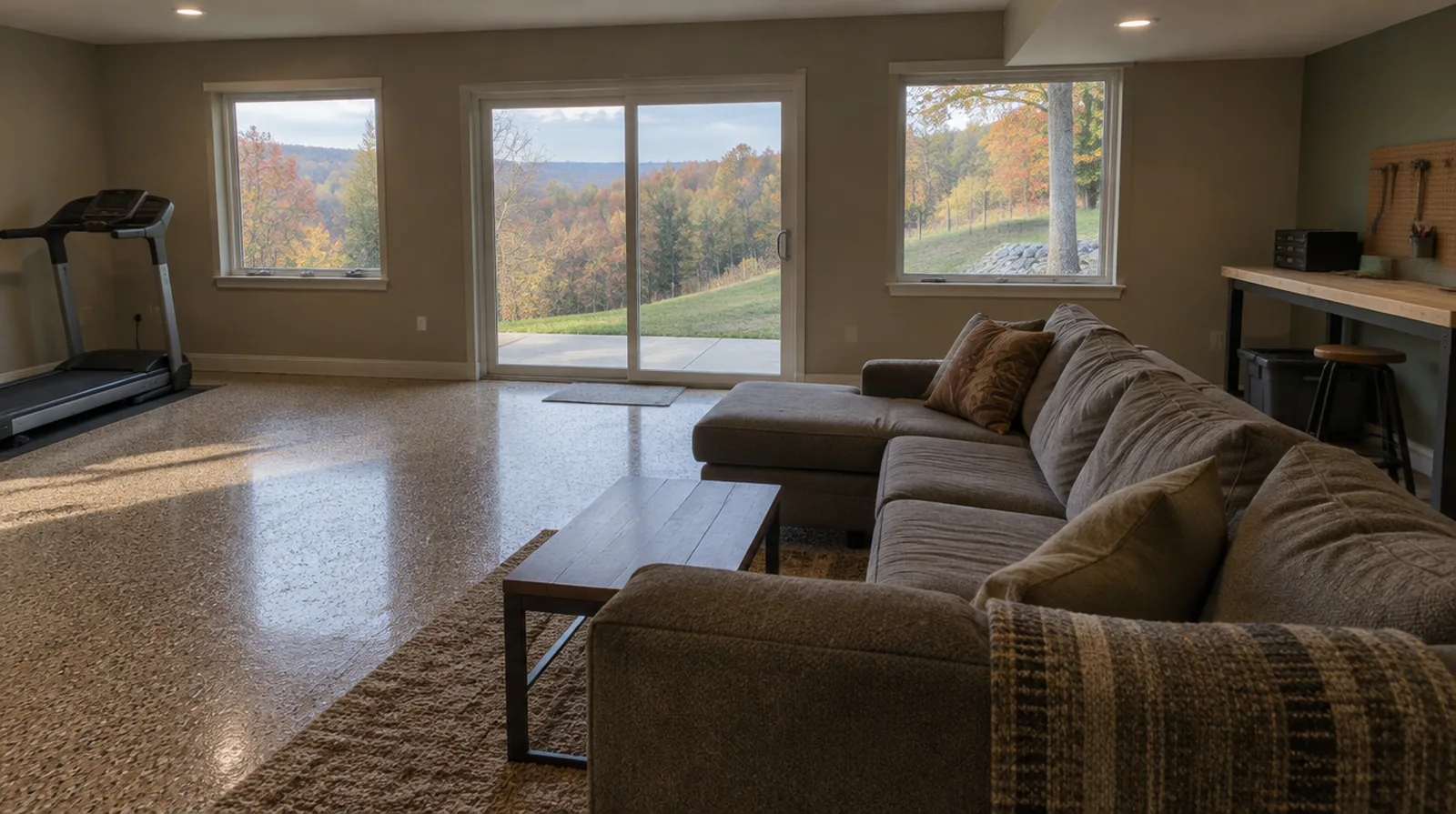
Where Clarksville's basements are
Basements are not the norm in Clarksville. Lots closer to the river and along Spadra Creek are flat and low, and homes there are usually built on slabs or crawl spaces. North of downtown, the ground rises into the Ozark foothills, and that is where we find walkout lower levels on sloped lots and older homes with partial basements or cellars. Some of the oldest basements in town have stone or block walls and floors that were patched many times over the years.
Spadra Creek flooded the town several times in the early 1900s before flood-control work, and heavy spring rains still soak the ground. That history is a good reminder that below-grade concrete here deals with a lot of moisture.
Moisture testing comes first
A basement slab is in constant contact with soil, and water vapor moves up through it, especially in a humid Arkansas summer. White crusty deposits, peeling paint and a musty smell are all signs. Coating a slab like that without testing is the most common reason basement floors fail.
We test with a moisture meter and, where needed, a longer covered test. We also look at downspouts, grading, window wells, the sump if there is one and any cracks where water comes through. Running water must be stopped first. Vapor can be managed with the right primer.
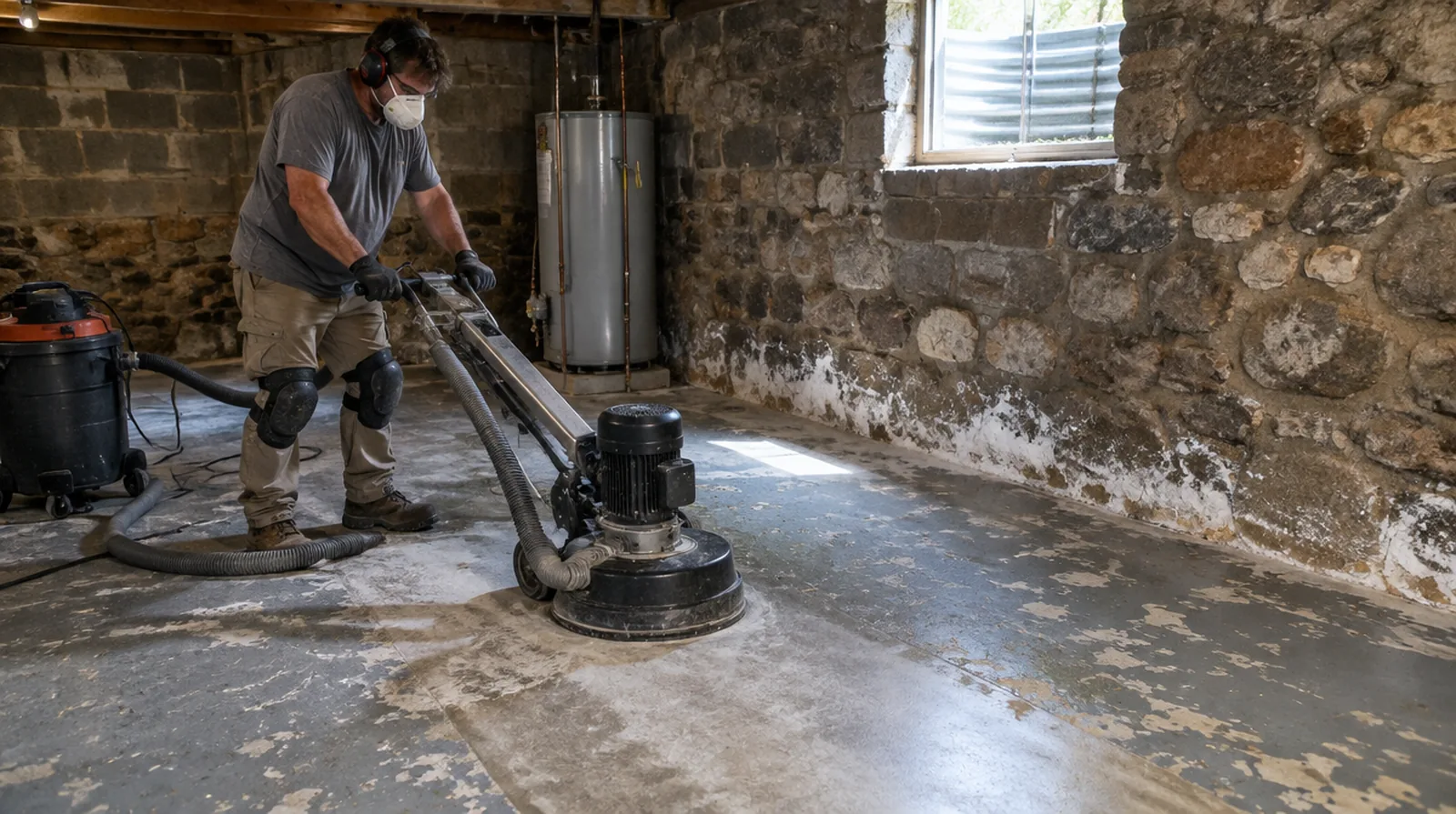
How we coat a basement floor
Remove what is there. Old paint, mastic from tile or carpet and loose patches are ground off with diamond tooling. Paint over damp concrete is the reason so many basement floors peel.
Repair. Cracks are filled, and low spots or rough patches are leveled so the finished floor is smooth.
Prime for moisture. Where readings call for it, we apply a vapor-resistant primer designed for below-grade slabs.
Build the finish. Most walkout basements get a flake system, which is durable, slip resistant and good at hiding wear. See epoxy flake flooring. For a sleeker family room look, metallic epoxy is an option on drier slabs.
Topcoat. A clear topcoat seals it all and makes cleanup easy.
Ideas for the space
Walkout basements in Clarksville often become a home gym, a game room, a workshop or a place for guests. A coated floor handles exercise equipment, rolling chairs and the mud that comes in through a back door that opens onto the yard. It also holds up far better than carpet if a little water ever gets in.
Planning to coat the garage too? Doing both at once with garage floor epoxy can save on setup and keeps the colors consistent.
Living with the floor
Run a dehumidifier during humid months, keep gutters and downspouts clear and sweep grit away regularly. If a heavy tool or weight ever chips the surface, epoxy floor repair can patch the spot.
Older basements need extra care
Some of the oldest homes in town have basements with stone walls, uneven floors and patches from decades of repairs. These spaces can still get a good coating, but the work takes longer. We grind high spots and fill low ones, seal cracks where the floor meets the walls, and sometimes skim the slab with a cement-based leveler before coating. Where the walls weep a little moisture in wet weather, we may leave a small gap or cove at the edge and recommend sealing the wall separately. We will give you an honest view of what the finished floor will look like in an older basement before you commit.
Common questions
My basement floor is painted and peeling. Can it be coated? Yes. We grind all of the old paint off first so the new system bonds to bare concrete.
How soon can I use the room? Light foot traffic the next day, furniture in two or three days.
Do you work in nearby towns? Yes, including Lamar, Coal Hill, Hartman, Knoxville and Ozark.
Find out what your basement floor needs
Call (479) 265-8325. We will look at the floor, test it for moisture and give you a written price for a coating that will last.