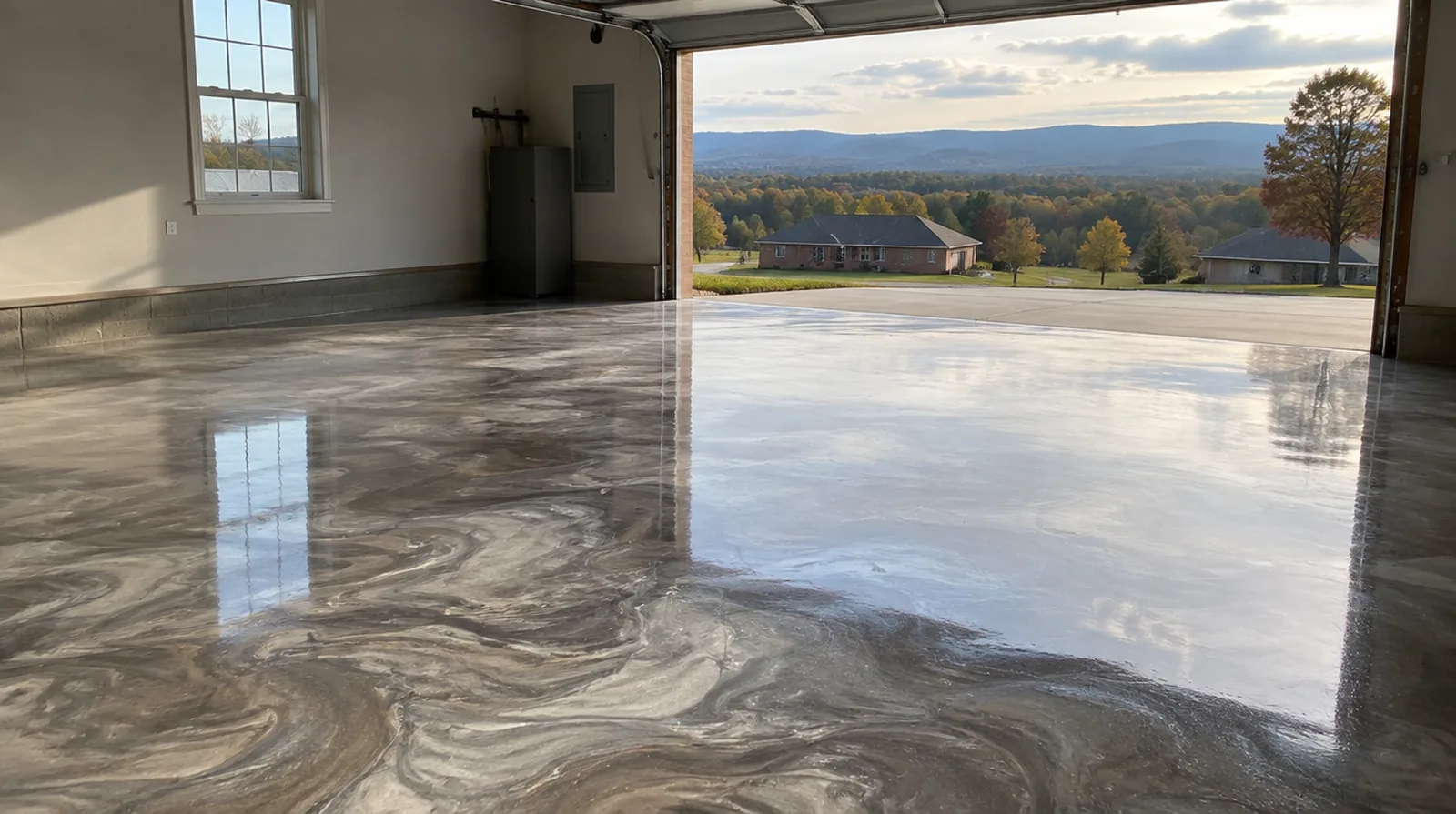
Look
Depth, shine and movement, like marble or water.
Process
Prep, primer, metallic pour worked by hand, clear top.
Care
Mats, pads and regular sweeping. A polyaspartic top adds scratch resistance.
Storefronts and studios
Some of the older buildings near the square have concrete floors under old tile or carpet. When those come up, metallic epoxy can turn the slab into a feature for a boutique, studio or salon.
At home
A finished basement, a home office or a bonus room can get the same look. It is a good fit for rooms that do not see grit and heavy tools.
What to expect
Prep comes first: grinding, crack filling and sometimes a skim coat so the clear metallic layer has a smooth base. Then we pour and work the color by hand. Two to three days is typical. Another installer's notes on what to expect from a metallic pour cover the same prep-to-topcoat sequence if you want a second look before you pick colors.
Limits
Gloss shows fine scratches and dust. Use mats and felt pads, and sweep often.
Metallic epoxy for Clarksville homes and storefronts
Metallic epoxy gives a floor depth and movement. In Clarksville it fits downtown storefronts in older buildings, salons, offices, game rooms and finished basements. The resin is poured and worked by hand, creating swirls and variations that make each floor unique.
Preparing the slab
Older downtown buildings often have slabs with patches, tile adhesive or uneven spots. We grind, fill and level so the metallic pour looks clean and smooth.
Questions about metallic floors
Is it hard to maintain? Not really. Dust-mop and damp-mop with a mild cleaner.
Will it look like the photos? Similar, but every floor is unique. We show sample boards first.
Can it go over wood? No, it needs a concrete base.
How long does it take? Three to four days, including cure time.
Choosing colors
Earth tones, silvers and deep blues are popular. We help you pick colors that suit the room and its light.
Bringing an old storefront back
Many brick buildings downtown have concrete under layers of old flooring. Once those layers come up and the slab is ground and patched, a metallic pour can give the space a modern floor that still suits its historic walls. It is a popular choice for boutiques, coffee shops and studios that want customers to notice the space the moment they walk in. We work around tenant schedules and keep dust contained.
Furniture and cure time
Light pieces can return after two days; heavy furniture after about a week.
Metallic floors for cabins and dens
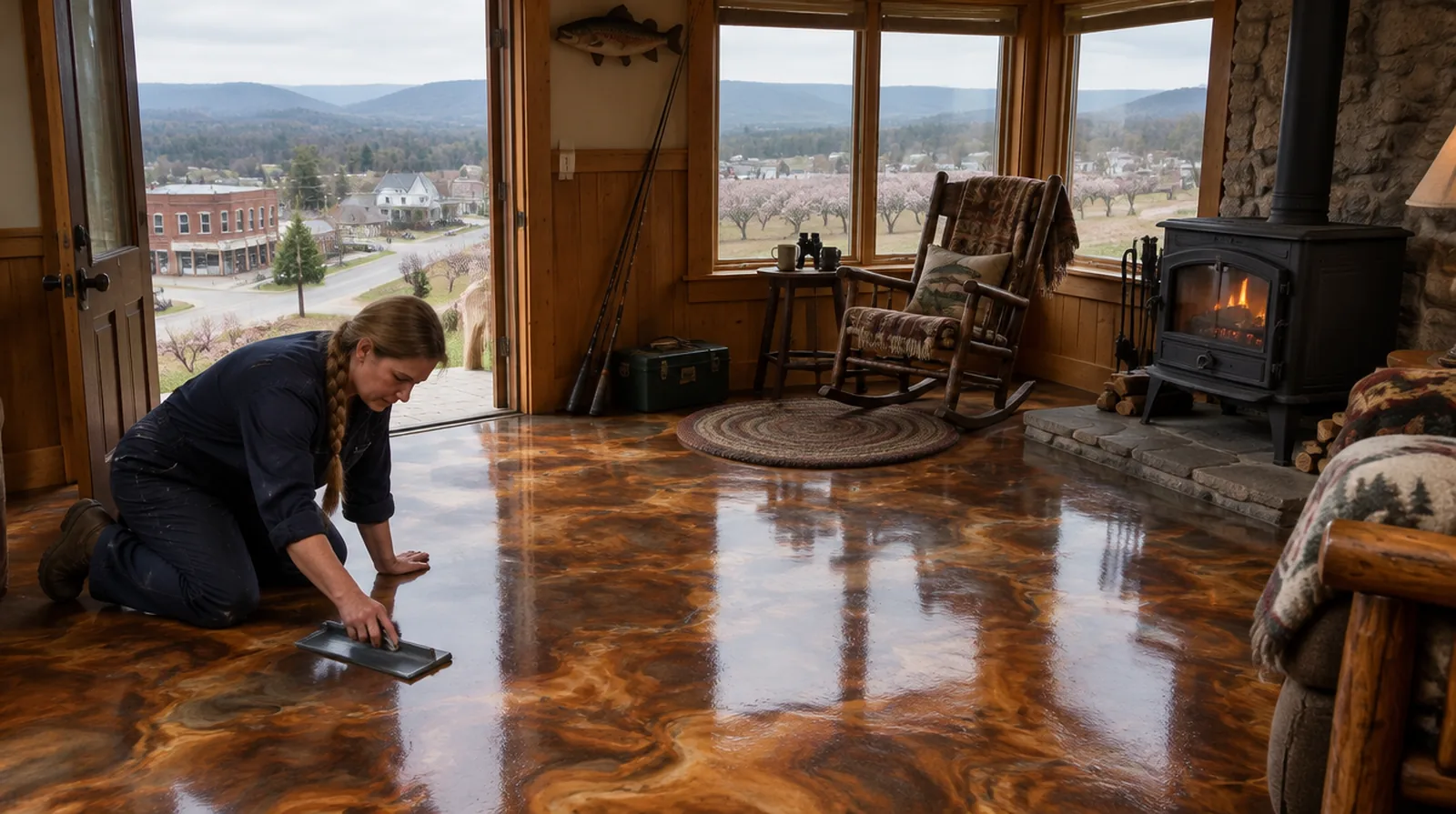
Metallic epoxy creates swirls and depth that make each floor different. Around Clarksville, owners use it in cabins near the lake and river, finished basements, dens and small shops that want a standout look.
Warm tones for cabins
Amber, walnut, bronze and copper tones pair well with wood walls and stoves in cabins and dens. Cooler grays and silvers suit modern rooms. We help you pick colors that fit the room.
Moisture checks
Lower-level and cabin slabs can hold more moisture. We test first and use a primer that suits the readings, because moisture is a common cause of coating failure.
How it is applied
The installer moves the metallic coat by hand with rollers, brushes and sprayers. No two floors look alike. A sample board helps you see the general effect before we start.
Protecting the gloss
A clear topcoat adds scratch resistance. Felt pads under furniture and mats at doors help the finish last.
Lighting
Metallic floors change with the light. Windows and lamps bring out different movement through the day.
Time to plan for
Metallic floors need more hands-on time than a basic coating, and the room stays closed while each layer cures. We give you a clear timeline up front.
Small business uses
Salons, boutiques and tasting rooms use metallic floors to stand out. In busier areas, we use a tougher topcoat and suggest mats at the entry.
Plan your metallic floor
Call (479) 265-8325.