Process
Grind, densify, polish and guard.
If your slab is damaged, a coating may be better.
How it works
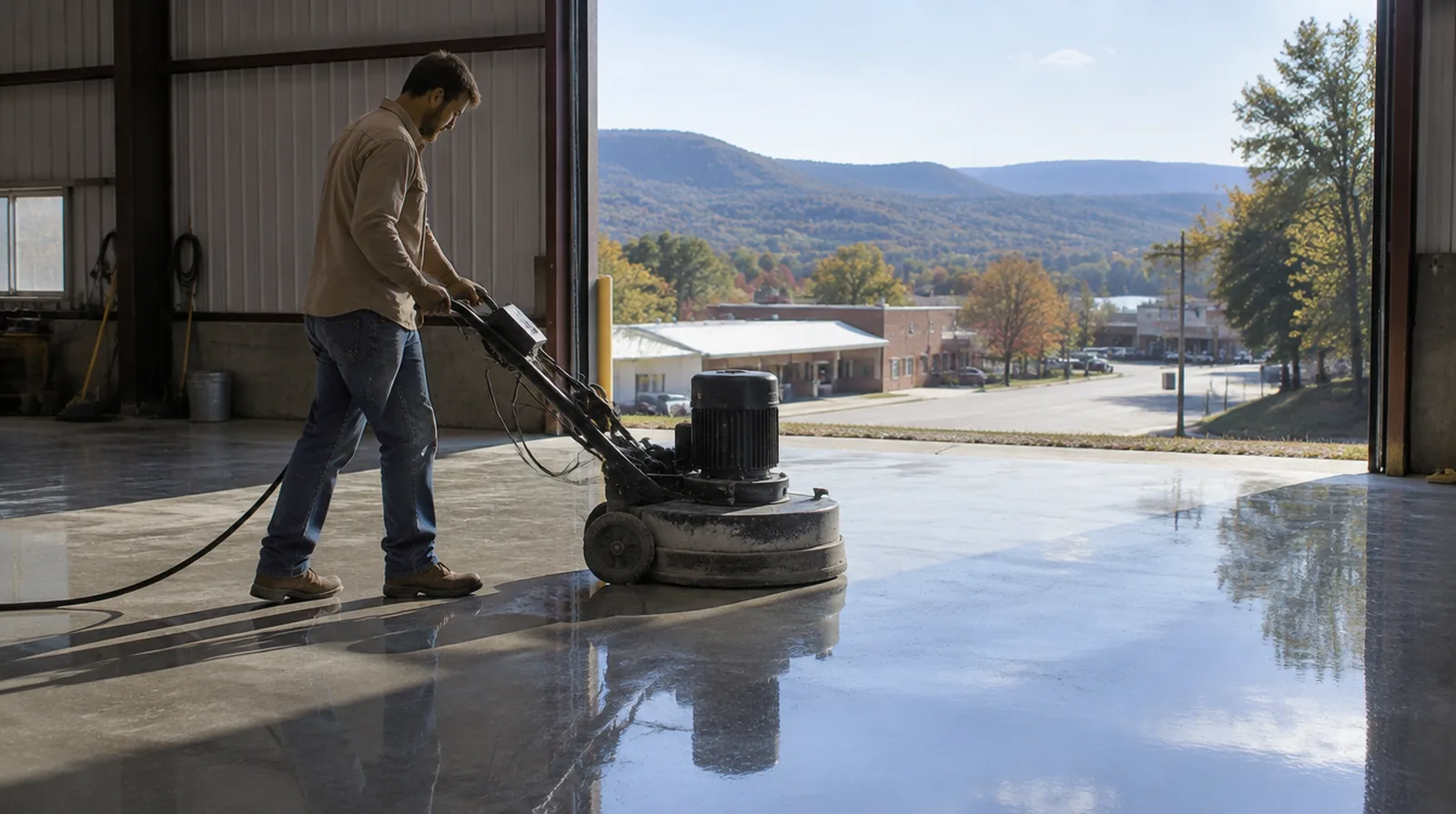
We grind the slab with coarse diamonds, apply a hardener that soaks in, and polish with finer pads until it has a clean sheen. A guard helps protect against stains.
Where it fits
Offices, retail and modern homes with slabs in good condition.
Older buildings
Slabs under old tile or carpet often have glue and patches. Some owners like the character that shows through. Others prefer a coating. We will show you a test area if you are unsure.
Care
Dust mop and use a neutral cleaner. Buff occasionally to keep the shine.
Is polished concrete slippery?
A polished floor is smooth, but it is not slick like a wet waxed floor when it is dry. When it gets wet, it can be slippery, so we suggest mats at entries and a lower sheen in areas near doors. For spaces that get wet all the time, a textured coating is the better choice.
Comparing it to a coating
Polished concrete has no layer on top to chip or peel, which is its biggest advantage. A coating offers more color choices and hides flaws better. At the estimate we look at your slab and show you which one will give you the look you want.
Polished concrete in Clarksville
Polished concrete suits shops, warehouses, older downtown buildings and some homes in Clarksville. It is the slab itself, ground and refined to a sheen, so there is no coating to peel. It cleans easily and holds up to heavy traffic.
Questions about polished concrete
Can old stains be removed? Some grind out; deep stains may remain visible.
How shiny can it get? From a soft matte to a high gloss. We will show you examples.
Is it a good fit for a farm shop? Often yes, since it handles equipment well and does not peel.
On older slabs, expect to see patches and repairs in the finished floor.
How we polish a slab
We start with coarse diamonds to open and flatten the surface, apply a densifier to harden it, then step through finer pads until the concrete reaches the sheen you picked. A guard sealer finishes it. Vacuums capture dust as we work, which matters in occupied buildings near campus or downtown.
Polished concrete for campus, retail and homes
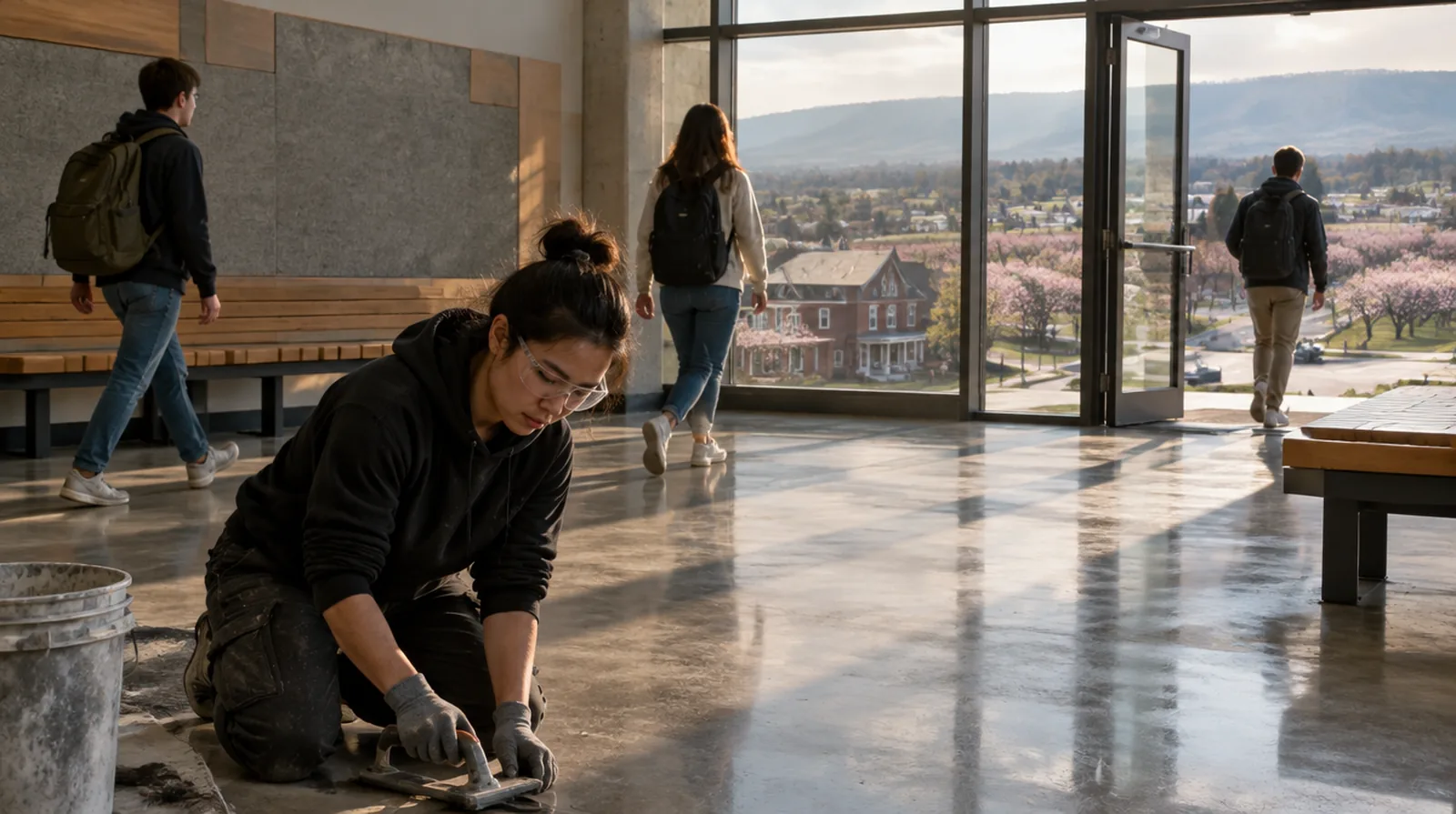
Polished concrete turns an existing slab into a durable, low-care floor. It suits lobbies, hallways, shops and offices, as well as some homes.
The process
We grind with diamond tooling, apply a densifier, then polish in steps to your chosen sheen. A guard goes on last to help resist stains.
Lobbies and hallways
Campus buildings and public spaces see steady foot traffic. Polished concrete handles it well and needs only regular dust mopping and occasional cleaning.
What the slab looks like
Every slab is different. Some show more stone when ground, others stay creamy. Old patches and cracks remain visible as part of the character.
Sheen choices
Satin hides scuffs better; high gloss reflects more light. We can polish a test area so you can compare.
Daily care
Dust mop daily and use a neutral cleaner. Walk-off mats at entries keep grit from scratching the surface.
Homes and shops
Some homeowners polish a converted garage or open living area. It pairs well with radiant heat.
Prep and repairs
Saw cuts, cracks and old anchor holes can be filled before polishing. Filled spots may look a little different from the rest of the slab, which many owners accept as part of the look.
Edges and corners
Walls, door frames and columns need hand tools. We take care at these edges so the sheen stays even across the room.
Working around schedules
We can polish in sections and work evenings so a shop or office does not lose business days.
Ag and shop buildings
Some shop owners polish a farm office or showroom area inside a larger metal building. It gives a clean finish that is easy to sweep.
Ask about polished concrete
Call (479) 265-8325.